

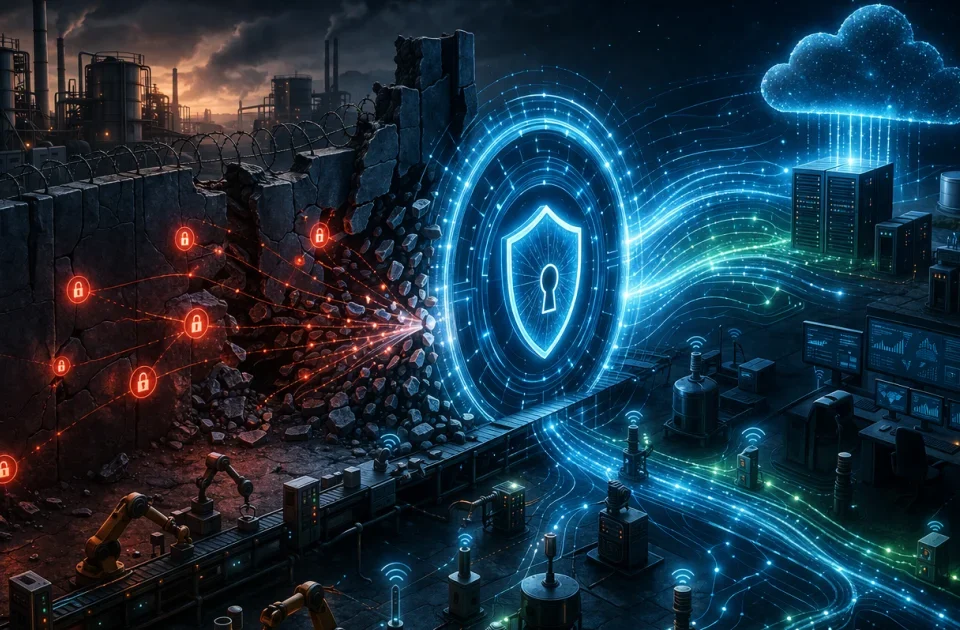
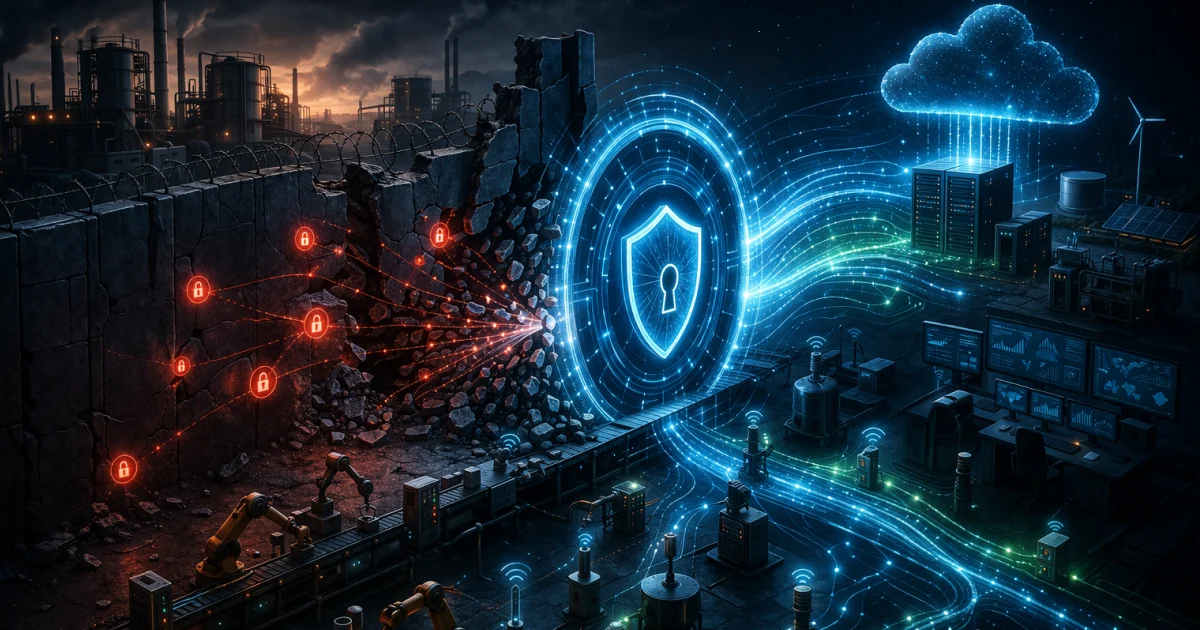
Zero trust has emerged as the gold standard of modern cybersecurity. By discarding the outdated "castle-and-moat" philosophy in favor of a mantra of "never trust, always verify," organizations have successfully hardened their enterprise IT environments. Yet, as the digital transformation of industrial sectors continues, a troubling trend has emerged: when the rigid, identity-centric principles of zero trust are applied to the Internet of Things (IoT) and Operational Technology (OT), the results are often disastrous.
For the modern enterprise, the collision between IT-grade security and OT-grade uptime is no longer just a technical hurdle—it is a critical business risk.
Main Facts: The Structural Mismatch
At its core, zero trust assumes a high degree of control over hardware and software. It relies on the ability to authenticate every request, evaluate device health, and enforce granular access policies in real-time.
However, IoT and OT environments operate on an entirely different set of physics. These systems were engineered decades ago with a single, overriding priority: availability. In a power plant, a hospital, or a manufacturing floor, a millisecond of latency or a forced reboot to accommodate a security handshake can result in physical danger, environmental catastrophe, or millions of dollars in lost production.
The "Zero-Trust Paradox" arises because the fundamental requirements of industrial stability—determinism and constant uptime—are diametrically opposed to the inherent overhead of zero-trust verification. When security teams push for continuous re-authentication or short-lived credentials, they are often inadvertently sabotaging the very systems they are tasked to protect.
Chronology of a Failed Strategy
The adoption of zero-trust in industrial settings has followed a predictable, yet flawed, trajectory over the last five years:
- The IT Mandate (2019-2021): Following the massive success of zero-trust in remote-work environments, C-suite executives mandated its expansion into the OT domain to address the growing threat of ransomware targeting critical infrastructure.
- The "Lift and Shift" Error (2021-2022): Security teams attempted to mirror IT security policies directly onto industrial networks. This led to immediate friction, as legacy Programmable Logic Controllers (PLCs) and proprietary industrial protocols crashed under the weight of security-agent overhead.
- The Operational Pushback (2022-2023): Plant managers and operations engineers began overriding security policies to maintain production, leading to a "shadow security" landscape where documentation claimed zero-trust compliance while reality remained dangerously vulnerable.
- The Pivot to Adaptation (2024-Present): Forward-thinking organizations are now moving away from "all-or-nothing" frameworks, embracing a hybrid, layered approach that prioritizes operational integrity alongside security.
Supporting Data and The "Five Failures"
Industry research from bodies like CISA and various cybersecurity analysts confirms that the failure of zero-trust in OT is not a failure of technology, but a failure of application. The breakdown occurs in five specific areas:
1. The Visibility Gap
Zero trust requires a perfect inventory of assets. In practice, OT environments are notoriously opaque. Many organizations operate "dark" assets—legacy equipment installed decades ago that lacks modern reporting capabilities. Security teams often discover "shadow OT" systems—unauthorized gateways or maintenance laptops—only after a breach has occurred.
2. Functional Coupling
While network diagrams might show clean, segmented zones, reality is messier. Broadcast discovery protocols and shared controllers create hidden dependencies. Even if two devices appear "air-gapped" at the network layer, they are often linked by a shared management plane or protocol translator, meaning a breach in one zone inevitably cascades into another.
3. The Myth of "Dynamic" Trust
Zero trust relies on the ability to revoke and re-verify access instantly. Conversely, OT is built on "durable trust." A sensor trusts a controller because it was programmed to do so at installation. These relationships are often hardcoded into firmware, making the "always verify" requirement of zero trust logically impossible without replacing the entire physical infrastructure.
4. Enforcement Chokepoints
When devices cannot be secured directly due to legacy limitations, security teams often push enforcement to gateways or cloud proxies. These become single points of failure. If an attacker compromises a centralized gateway, they inherit the "trusted" status of everything behind it, rendering the entire zero-trust architecture moot.
5. The "Unicorn" Skills Gap
The cultural chasm between IT and OT remains the single greatest impediment to success. IT professionals view security as an evolving, dynamic process; OT professionals view it as a potential vector for downtime. Without "unicorn" talent—engineers who understand both the nuances of Modbus/PROFINET protocols and the architecture of modern identity management—governance remains fragmented and ineffective.
Official Responses and Industry Perspectives
Cybersecurity experts are calling for a fundamental shift in how we define "Zero Trust" for industrial contexts.
"We need to stop viewing Zero Trust as a destination and start viewing it as a continuous improvement lifecycle," notes one lead security architect. Industry leaders are advocating for a "Security-by-Design" approach where security is integrated into the operational lifecycle rather than applied as a layer on top.
Furthermore, the shift toward passive monitoring has been universally praised. Rather than active agents that poll devices for status—which can trigger faults in sensitive equipment—passive sensors listen to network traffic, allowing teams to gain visibility without touching a single PLC.
Strategic Implications for the Enterprise
To bridge this gap, successful organizations are adopting a multi-tiered strategy that balances the rigor of security with the realities of the plant floor.
Moving Beyond the "Project" Mentality
The most effective path forward is to abandon the idea of a "Zero-Trust Project" and instead implement a "Security Posture Improvement Program." This treats security as an operational KPI, similar to safety or production quotas.
The Role of AI in Segmentation
Human-led segmentation in networks with thousands of devices is prone to error. Leading firms are now utilizing AI-driven traffic analysis to map communication patterns. These AI models suggest logical segments, which are then vetted by OT engineers. This ensures that the security policy aligns with the actual flow of production data.
Prioritizing the Management Plane
If the devices themselves cannot be secured, the management plane—the update servers, the engineering workstations, and the protocol gateways—must be hardened to an extreme degree. By treating these central nodes as "High-Value Targets," organizations can create a secure perimeter around the legacy assets that are otherwise impossible to update.
Aligning Metrics with Operational Reality
Security teams must stop speaking in the language of "identity-based access" and start speaking in the language of "protected uptime." When security investments are framed as a way to prevent costly downtime and ensure regulatory compliance, they receive the necessary buy-in from operations leaders.
Conclusion: A Pragmatic Path Forward
Zero trust is not a flawed philosophy, but it is an incomplete one when applied to the industrial world in its original, enterprise-focused form. The path to a secure industrial future lies in adaptation, not imposition.
Organizations that succeed will be those that accept the limitations of their legacy equipment, focus on passive visibility, and build a culture where security and operations are aligned toward a common goal: resilient, continuous production. The ultimate measure of success is not how many "zero-trust" boxes are checked on a compliance audit, but how effectively the organization can withstand a compromise, isolate the threat, and maintain the critical operations that the world depends on.
As we move deeper into an era of hyper-connected infrastructure, the integration of these two worlds is no longer optional. It is the defining challenge of the next generation of industrial leadership.